
TOP 30 SEARCH QUESTION BEFORE BUYING PROPERTY IN UTTARAKHAND
1. Can outsiders buy property in Uttarakhand? Answer: Yes, Indian citizens from other states can generally buy property in Uttarakhand, subject to applicable state laws, zoning regulations, and local restrictions. 2. Can non-Uttarakhand residents buy agricultural land? Answer: Agricultural land purchases may be subject to specific state regulations. Buyers should verify current eligibility requirements before proceeding. 3. What are the land purchase rules in Uttarakhand? Answer: Rules vary based on land type, location, and intended use. Buyers should verify ownership, land classification, and development permissions. 4. Is this property legally clear? Answer: Review the title deed, ownership records, encumbrance certificate, and any pending litigation before purchase. 5. How do I verify property documents in Uttarakhand? Answer: Check registration records, land records, tax receipts, approvals, and have a property lawyer conduct due diligence. 6. Can I buy land and build a house in Uttarakhand? Answer: Yes, provided the land is legally suitable for residential construction and all required approvals are obtained. 7. What is the maximum land I can buy? Answer: Limits may depend on land type and applicable regulations. Always verify current state rules before purchase. 8. Can agricultural land be converted into residential land? Answer: In many cases, conversion is possible after obtaining the required approvals from relevant authorities. 9. How do I check land ownership online? Answer: Ownership records can often be verified through official land record portals and registration offices. 10. Are there restrictions on buying property in hill stations? Answer: Certain environmentally sensitive, forest-adjacent, or protected areas may have additional restrictions. 11. Is Uttarakhand a good place to invest in property? Answer: Uttarakhand attracts investors due to tourism, retirement demand, scenic locations, and growing infrastructure. 12. Which city is best for property investment in Uttarakhand? Answer: Popular investment destinations include Dehradun, Rishikesh, Haridwar, Nainital, and Mussoorie. 13. Will property prices increase in Uttarakhand? Answer: Areas with strong tourism, infrastructure projects, and residential demand often experience long-term appreciation. 14. Is it better to buy in Dehradun or Rishikesh? Answer: Dehradun offers stronger year-round residential demand, while Rishikesh attracts tourism and wellness-focused buyers. 15. What is the future of real estate in Uttarakhand? Answer: Growth is supported by tourism, retirement housing, second homes, and improved connectivity. 16. Which areas have the highest appreciation potential? Answer: Locations near highways, airports, tourism hubs, and expanding urban centers typically show stronger appreciation. 17. Is now the right time to buy property in Uttarakhand? Answer: If the property meets your financial goals and passes legal verification, timing the market is usually less important than buying the right asset. 18. Can I earn rental income from my property? Answer: Yes, especially in tourist destinations and major cities where short-term and long-term rental demand exists. 19. What is the ROI on Uttarakhand property? Answer: Returns vary based on location, property type, occupancy, and market conditions. 20. Is a plot better than a villa in Uttarakhand? Answer: Plots generally offer higher appreciation potential, while villas can provide immediate lifestyle benefits and rental income. 21. Is buying a holiday home in Uttarakhand worth it? Answer: Many buyers choose Uttarakhand for second homes because of its climate, scenery, and tourism appeal. 22. Which is the best place for a second home in Uttarakhand? Answer: Popular choices include Mussoorie, Nainital, Rishikesh, and areas around Dehradun. 23. Can I rent my holiday home on Airbnb? Answer: Many owners do so, but local regulations, taxation, and licensing requirements should be checked first. 24. How much rental income can a holiday home generate? Answer: Income depends on location, property quality, tourist demand, occupancy rates, and seasonality. 25. What are the maintenance costs of a hill property? Answer: Costs may include security, landscaping, repairs, caretaker services, utility charges, and weather-related maintenance. 26. Is property in Dehradun a good investment? Answer: Yes. Dehradun benefits from educational institutions, healthcare facilities, business activity, and connectivity improvements. 27. Should I buy property in Rishikesh? Answer: Rishikesh is popular among tourists, wellness travelers, retirees, and second-home buyers. 28. Is Nainital good for a vacation home? Answer: Yes. Nainital remains one of Uttarakhand's most sought-after destinations for holiday homes. 29. Can I buy property in Mussoorie? Answer: Yes, subject to legal verification, land-use regulations, and local building norms. 30. Which is the best hill station to buy property in Uttarakhand? Answer: The answer depends on your goal: Investment: Dehradun Tourism Rental: Rishikesh Holiday Home: Nainital Luxury Lifestyle: Mussoorie Spiritual Living: Haridwar
 Blog
Blog
10 Questions before buying property in Maharashtra
1. Is this property legally clear? Answer: Verify the title deed, ownership history, encumbrance certificate, and ensure there are no legal disputes or claims on the property. 2. Is the project registered with MahaRERA? Answer: Always check if the project is registered with MahaRERA. Registration provides transparency regarding approvals, timelines, and developer commitments. 3. What are the hidden charges besides the property price? Answer: Buyers should account for: Stamp Duty Registration Charges GST (if applicable) Maintenance Charges Parking Charges Society Formation Charges 4. Is this location a good investment? Answer: Evaluate: Metro connectivity Highway access Employment hubs Infrastructure projects Rental demand Future development plans 5. Can I get a home loan on this property? Answer: Most approved projects are eligible for financing from banks and housing finance companies, subject to your eligibility and property verification. 6. What documents should I check before buying? Answer: Sale Deed Title Deed Encumbrance Certificate Approved Building Plan Occupancy Certificate (OC) Completion Certificate (CC) Property Tax Receipts MahaRERA Registration Details 7. Should I buy a flat, plot, or villa in Maharashtra? Answer: Flat: Suitable for self-use and rental income. Plot: Higher long-term appreciation potential. Villa: Better lifestyle and privacy but higher maintenance costs. 8. Is this property good for rental income? Answer: Rental demand is generally stronger near IT hubs, industrial zones, business districts, educational institutions, and transport corridors. 9. What is the future appreciation potential of this property? Answer: Appreciation depends on: Infrastructure growth Metro expansion New highways Commercial development Demand-supply dynamics 10. What is the biggest mistake buyers make in Maharashtra? Answer: Purchasing based only on location or marketing promises without verifying legal documents, approvals, total costs, and future development prospects. Bonus High-Intent Maharashtra Questions Can outsiders buy property in Maharashtra? Answer: Yes. Any Indian citizen can buy residential and commercial property in Maharashtra. Which city is best for property investment in Maharashtra? Answer: Popular choices include: Mumbai Pune Nashik Nagpur Thane Is it better to buy under-construction or ready-to-move property? Answer: Ready-to-move properties offer immediate possession and lower risk, while under-construction projects may provide better pricing and appreciation potential. How much down payment is usually required? Answer: Most buyers arrange 10–25% of the property value as a down payment, with the remainder financed through a home loan. What should I do immediately after buying property? Answer: Register the property. Complete mutation. Transfer utility connections. Update tax records. Secure property insurance. These are among the most searched and highest-converting property questions asked by buyers in Maharashtra.
 Blog
Blog
10 QUESTIONS BEFORE BUYING PROPERTY IN GOA
1. Can non-Goans buy property in Goa? Answer: Yes. Any Indian citizen can buy residential or commercial property in Goa. Being a Goan is not a requirement. However, buyers should verify land classification, title documents, and applicable local regulations before purchasing. 2. Which is the best area to buy property in Goa? Answer: It depends on your goal: Rental Income: Areas around Calangute, Candolim, and Anjuna. Luxury Living: Assagao and Siolim. Peaceful Retirement: Colva and Varca. Long-Term Appreciation: Areas benefiting from new infrastructure and tourism growth. 3. Is Goa property a good investment? Answer: Goa remains one of India's most desirable lifestyle and tourism destinations. Properties in well-connected locations often attract both end-users and rental demand. Investment potential depends on location, legal compliance, and purchase price. 4. Can I earn rental income from my Goa property? Answer: Yes. Many owners generate income through long-term rentals or holiday rentals. Income varies depending on property type, occupancy, location, seasonality, and management quality. 5. What are the best places to buy a villa in Goa? Answer: Popular villa destinations include: Assagao Siolim Anjuna Vagator Candolim These areas are known for lifestyle appeal, tourism demand, and strong buyer interest. 6. Is Airbnb profitable in Goa? Answer: It can be profitable when the property is in a high-demand tourist area, professionally managed, and legally compliant. Occupancy and revenue fluctuate by season, property quality, and competition. 7. What documents should I check before buying property in Goa? Answer: Title Deed Sale Deed Encumbrance Certificate Property Tax Receipts Approved Building Plans Occupancy Certificate (if applicable) RERA Registration (for eligible projects) Mutation Records A qualified property lawyer should review all documents before purchase. 8. Are there restrictions on buying land in Goa? Answer: Certain categories of land may be subject to restrictions, zoning rules, environmental regulations, or special permissions. Buyers should confirm land use, development rights, and compliance requirements before proceeding. 9. How much rental income can a Goa villa generate? Answer: Rental income depends on: Location Property size Amenities (pool, view, proximity to beach) Occupancy levels Management quality Well-located villas generally command higher rental rates than properties in less-visited areas. 10. Should I buy property in North Goa or South Goa? Answer:North Goa Higher tourist footfall More restaurants, nightlife, and rental demand Often preferred by investors South Goa Less crowded More peaceful lifestyle Popular with retirees and long-term residents Choose North Goa for stronger rental activity and South Goa for tranquility and lifestyle. Bonus Question What is the biggest mistake people make when buying property in Goa? Answer: Falling in love with the location and buying without proper legal due diligence. Always verify ownership, approvals, zoning restrictions, title history, and future development plans before making a purchase decision.
 Blog
Blog
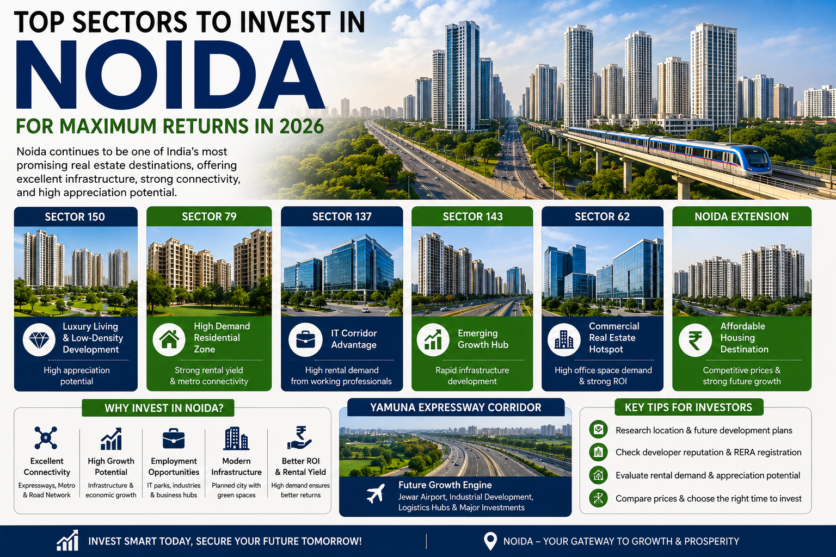
Top Sectors to Invest in Noida for Maximum Returns in 2026
Introduction Noida has established itself as one of India's most attractive real estate investment destinations. Strong infrastructure development, excellent connectivity, growing employment opportunities, and large-scale projects such as the Noida International Airport have significantly increased investor confidence. However, not all locations within Noida offer the same growth potential. Choosing the right sector can make a substantial difference in rental income, capital appreciation, and long-term returns. This guide explores the top sectors in Noida that are attracting investors in 2026 and the reasons behind their growing popularity. Why Location Matters in Real Estate Investment The success of any real estate investment largely depends on location. Properties situated near major infrastructure projects, business districts, metro stations, educational institutions, and healthcare facilities typically experience higher demand and better appreciation. When evaluating investment opportunities, investors should consider: Connectivity Infrastructure development Employment hubs Future growth potential Rental demand Social infrastructure Noida offers several sectors that meet these criteria and present excellent opportunities for investors. Sector 150: The Luxury Investment Destination Sector 150 has emerged as one of the most premium residential locations in Noida. Key Advantages Low-density development Large green spaces Modern residential projects Sports and recreational facilities Excellent connectivity to Noida-Greater Noida Expressway The sector is known for its luxury developments and planned urban design. Investors seeking premium residential properties often prefer Sector 150 due to its exclusivity and long-term appreciation potential. Investment Potential Property values in Sector 150 have shown consistent growth over the years, making it one of the strongest investment locations in Noida. Sector 79: High Demand Residential Zone Sector 79 has become a preferred choice among homebuyers and investors alike. Why Investors Like Sector 79 Established residential ecosystem Good metro connectivity Reputed schools nearby Strong rental demand Presence of modern housing projects The sector offers a balanced combination of affordability and lifestyle, making it attractive for both end-users and investors. Future Growth As infrastructure continues to improve, property prices in Sector 79 are expected to witness further appreciation. Sector 137: The IT Corridor Advantage Sector 137 benefits significantly from its location along the Noida Expressway. Major Strengths Close proximity to IT parks Strong demand from working professionals Metro connectivity Growing commercial activity High rental occupancy rates The presence of corporate offices creates a steady stream of tenants, making this sector particularly attractive for investors seeking rental income. Rental Yield Opportunities Properties in Sector 137 often enjoy healthy rental demand due to the large working population employed in nearby business parks. Sector 143: Emerging Growth Hub Sector 143 has gained attention due to rapid infrastructure development and strategic location advantages. Investment Drivers Direct access to Noida Expressway Expanding metro connectivity New residential developments Growing demand among young professionals The sector offers investors an opportunity to enter the market before property prices reach maturity. Long-Term Outlook As development continues, Sector 143 is expected to become one of the most sought-after residential locations in Noida. Sector 62: Commercial Real Estate Hotspot Sector 62 remains one of Noida's most established commercial districts. Why Commercial Investors Prefer Sector 62 Major IT and business hub Presence of multinational corporations High office space demand Strong infrastructure Excellent connectivity Commercial properties in this sector often attract businesses looking for premium office locations. Investment Benefits Commercial investments in Sector 62 can generate stable rental income and long-term appreciation. Noida Extension (Greater Noida West) Noida Extension has emerged as a favorite destination for affordable housing investments. Key Benefits Competitive property prices Rapid infrastructure development Strong residential demand Growing social infrastructure Good connectivity to Noida and Delhi The area appeals to first-time homebuyers and middle-income families. Investment Outlook As connectivity improves and new projects become operational, property values are expected to rise steadily. Sector 93: Premium Residential Destination Sector 93 is one of Noida's most established and prestigious residential sectors. Key Features Premium residential projects Excellent infrastructure Mature neighborhood High-end lifestyle amenities Strong demand from affluent buyers The sector continues to attract investors looking for stable appreciation and premium rental opportunities. Yamuna Expressway Corridor The Yamuna Expressway region has become one of the most talked-about investment corridors in North India. Growth Catalysts Noida International Airport Industrial developments Logistics hubs New residential projects Government infrastructure investments Investors with a long-term perspective are increasingly exploring opportunities along this corridor. Future Potential The region is expected to experience significant growth over the next decade as airport-related development accelerates. Factors to Consider Before Investing Before purchasing property in any sector, investors should evaluate: Developer Reputation Choose projects developed by established and trusted builders. Legal Compliance Verify project approvals and RERA registration. Infrastructure Status Assess both existing and upcoming infrastructure developments. Rental Demand Understand tenant demand and expected rental income. Future Development Plans Analyze government and private-sector investments in the surrounding area. Best Sectors Based on Investment Goals For Luxury Investment Sector 150 Sector 93 For Rental Income Sector 137 Sector 62 For Affordable Housing Noida Extension Sector 143 For Long-Term Appreciation Yamuna Expressway Corridor Sector 150 Investors should align their sector selection with their financial goals and investment horizon. Conclusion Noida continues to offer some of the best real estate investment opportunities in India. From luxury residential destinations such as Sector 150 to high-growth corridors along the Yamuna Expressway, the city provides options for every type of investor. The combination of infrastructure development, corporate expansion, metro connectivity, and airport-driven growth is creating significant opportunities across multiple sectors. For investors seeking maximum returns in 2026 and beyond, selecting the right location within Noida can be the key to long-term success and wealth creation.
Impact of Jewar International Airport on Property Prices: A Complete Investment Guide for 2026
Introduction Infrastructure has always been one of the strongest drivers of real estate growth. Across the world, major airports have transformed surrounding regions into thriving economic hubs, creating new opportunities for businesses, industries, and property investors. In India, the upcoming Noida International Airport at Jewar is expected to play a similar role. Located in the Yamuna Expressway region of Uttar Pradesh, Jewar Airport is one of the country's most ambitious infrastructure projects. The airport is not only expected to enhance connectivity but also redefine the real estate landscape of Noida, Greater Noida, and nearby areas. As construction progresses and supporting infrastructure develops, property prices in the region have witnessed substantial appreciation. Investors, homebuyers, and developers are increasingly focusing on areas surrounding the airport due to their long-term growth potential. Understanding the Jewar Airport Project The Noida International Airport is being developed near Jewar in Gautam Buddha Nagar district. Once completed, it is expected to become one of India's largest airports, handling millions of passengers annually. Key highlights include: International passenger and cargo facilities Multi-phase expansion plans Direct connectivity to Delhi-NCR Integration with expressways and metro networks Creation of commercial and logistics hubs The airport is expected to significantly improve regional connectivity while attracting domestic and international investments. Why Airports Influence Real Estate Prices Historically, airports have acted as catalysts for urban development. Areas surrounding major airports often experience rapid growth due to: Improved Connectivity Businesses prefer locations with easy access to national and international transportation networks. Better connectivity increases the attractiveness of residential and commercial properties. Employment Generation Airports create direct and indirect employment opportunities across sectors such as aviation, hospitality, logistics, retail, transportation, and construction. Business Expansion Large-scale infrastructure attracts industries, multinational corporations, warehouses, hotels, and commercial developments. Population Growth As employment opportunities increase, more people relocate to the region, driving demand for housing and supporting infrastructure. These factors collectively contribute to rising property values. Property Price Growth Along the Yamuna Expressway The Yamuna Expressway has emerged as one of the biggest beneficiaries of the airport project. Before the airport announcement, many parts of the corridor were viewed primarily as long-term land investment destinations. However, the development of the airport has transformed market sentiment. Several sectors and townships along the expressway have recorded significant appreciation due to: Growing investor confidence Increased developer activity Infrastructure development Future commercial opportunities Both residential and commercial properties have experienced growing demand from investors seeking early-mover advantages. Areas Witnessing Maximum Impact Jewar Being the airport location itself, Jewar has become a major investment hotspot. Land prices have witnessed considerable growth as developers and investors anticipate future demand. Yamuna Expressway Sectors Residential and mixed-use projects near the expressway have gained popularity due to their proximity to the airport. Greater Noida Greater Noida is expected to benefit from improved connectivity, increased economic activity, and growing housing demand. Noida Noida's commercial and residential markets are likely to receive long-term support from enhanced regional connectivity and business expansion. Commercial Real Estate Opportunities One of the biggest impacts of the airport is expected to be on commercial real estate. Office Spaces Businesses seeking modern office infrastructure near transportation hubs are increasingly exploring opportunities around the airport corridor. Retail Developments Growing population and visitor traffic will create demand for shopping centers, entertainment zones, and retail complexes. Hospitality Sector Hotels, serviced apartments, and convention facilities are expected to witness substantial growth as passenger traffic increases. Logistics and Warehousing Cargo operations are likely to create significant demand for logistics parks, warehouses, and industrial facilities. These segments present attractive investment opportunities for commercial investors. Impact on Residential Real Estate Residential demand is expected to rise significantly as employment opportunities increase. Key housing segments likely to benefit include: Affordable Housing Young professionals and first-time homebuyers are expected to drive demand for affordable residential projects. Mid-Segment Housing Families seeking modern housing with good connectivity will continue to support this segment. Premium Housing High-income professionals and business owners may increasingly prefer premium developments located near emerging commercial districts. Developers have already started launching projects catering to various buyer categories. Infrastructure Development Beyond the Airport The airport itself is only one part of a larger development ecosystem. Several supporting infrastructure projects are underway, including: Road network upgrades Metro connectivity plans Industrial parks Logistics hubs Smart city developments Commercial business districts These projects are creating a comprehensive growth corridor that extends far beyond the airport boundary. Investor Benefits Capital Appreciation Property values are expected to continue appreciating as infrastructure projects progress and economic activity expands. Rental Income Potential The growing workforce and business ecosystem are likely to generate sustained rental demand. Long-Term Wealth Creation Investors entering the market during the early growth phase may benefit from long-term appreciation over the next decade. Portfolio Diversification The region offers opportunities across residential, commercial, industrial, and land investments. Challenges Investors Should Consider While growth prospects remain strong, investors should exercise caution and conduct thorough research. Important considerations include: Project approvals Developer reputation Legal documentation Infrastructure timelines Market demand analysis RERA compliance A disciplined investment approach can help reduce risks and improve returns. Future Outlook The long-term outlook for the Jewar Airport region remains highly positive. Experts believe the airport will act as a major economic catalyst, attracting investments across multiple sectors. Over the next decade, the region could evolve into: A major logistics hub A business and commercial center A residential growth corridor An industrial investment destination A key gateway for North India As development continues, property demand is expected to remain strong. Conclusion The Noida International Airport at Jewar is more than just an aviation project—it is a transformative development that is reshaping the entire real estate landscape of western Uttar Pradesh. Improved connectivity, infrastructure expansion, job creation, and business growth are already influencing property markets across Jewar, Yamuna Expressway, Greater Noida, and Noida. For investors seeking long-term growth opportunities, the airport corridor represents one of India's most promising real estate destinations. While careful due diligence remains essential, the region's future growth potential makes it a compelling choice for both residential and commercial investments.
 Blog
Blog
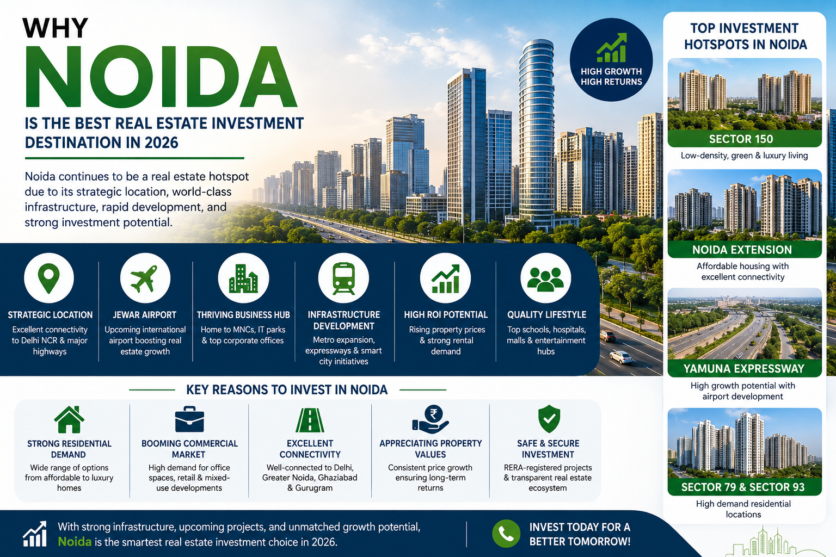
Why Noida Is the Best Real Estate Investment Destination in 2026
Introduction India's real estate sector is evolving rapidly, and Noida has emerged as one of the most attractive investment destinations in the country. Located in the National Capital Region (NCR), Noida offers a perfect combination of infrastructure development, employment opportunities, connectivity, and modern urban planning. As investors and homebuyers look for locations with strong growth potential, Noida continues to outperform many established real estate markets. In 2026, the city is witnessing unprecedented demand across residential, commercial, and mixed-use developments. With transformative projects such as the Noida International Airport, metro expansions, and expressway connectivity, Noida is setting new benchmarks for real estate growth. Strategic Location Advantage One of the biggest reasons behind Noida's success is its strategic location. The city enjoys seamless connectivity to Delhi, Ghaziabad, Greater Noida, Faridabad, and Gurugram through a well-developed network of roads and expressways. Major connectivity corridors include: Noida-Greater Noida Expressway Yamuna Expressway Delhi-Meerut Expressway Eastern Peripheral Expressway DND Flyway These infrastructure assets have significantly reduced travel time and improved accessibility, making Noida a preferred destination for working professionals and businesses. Noida International Airport: A Game Changer The upcoming Noida International Airport at Jewar is expected to transform the region's economic and real estate landscape. Once operational, it will become one of India's largest airports, attracting domestic and international investments. The airport is expected to: Increase property demand in surrounding areas Create thousands of jobs Boost tourism and business travel Encourage commercial and industrial development Enhance long-term property appreciation Areas along the Yamuna Expressway have already started witnessing increased investor interest due to the airport project. Strong Residential Demand Noida offers housing options across all budget segments, making it attractive for a wide range of buyers. Popular residential categories include: Affordable Housing Ideal for first-time homebuyers seeking quality homes at competitive prices. Mid-Segment Housing The most active segment, attracting salaried professionals and families. Luxury Residences Premium developments with modern amenities continue to witness strong demand from high-net-worth individuals. The city's planned infrastructure, green spaces, and modern lifestyle amenities contribute to its growing popularity among end-users. Thriving Commercial Real Estate Market Noida has become a major business hub in North India. Numerous IT companies, multinational corporations, startups, and technology firms have established operations in the city. Key commercial hotspots include: Sector 62 Sector 63 Sector 125 Sector 132 Noida Expressway Corridor The growing office market has created strong demand for residential housing, retail spaces, and co-working facilities. Infrastructure Development Driving Growth Infrastructure remains the backbone of Noida's real estate success story. Major ongoing developments include: Metro Expansion The expansion of metro connectivity is improving access between Noida, Greater Noida, and Delhi. Road Network Improvements New roads, flyovers, and expressways are reducing congestion and improving mobility. Smart City Initiatives Digital infrastructure, sustainable development, and smart urban planning are enhancing the quality of life for residents. These developments continue to increase the attractiveness of Noida as a long-term investment destination. High Return on Investment Potential Real estate investors are increasingly choosing Noida because of its strong appreciation potential. Several factors contribute to rising property values: Airport development Infrastructure expansion Corporate growth Rising housing demand Limited premium land availability Properties located near major infrastructure projects often witness significant capital appreciation over time. Emerging Investment Hotspots Some of the most promising investment locations in Noida include: Sector 150 Known for low-density development, green spaces, and luxury projects. Noida Extension Offers affordable housing with excellent connectivity. Yamuna Expressway Benefiting directly from the upcoming airport and industrial developments. Sector 79 and Sector 93 Popular residential zones with growing demand among families and professionals. Investors looking for long-term gains are actively exploring these locations. Why Homebuyers Prefer Noida Apart from investment opportunities, Noida provides an excellent quality of life. Key advantages include: Planned urban infrastructure Reputed schools and universities Advanced healthcare facilities Shopping malls and entertainment hubs Green parks and recreational spaces Strong public transportation network These factors make Noida one of the most livable cities in North India. Future Outlook The future of Noida's real estate market appears exceptionally promising. The combined impact of airport development, industrial expansion, commercial growth, and infrastructure investments is expected to drive sustained demand across all property segments. Experts believe that Noida will continue to attract investors, developers, and homebuyers seeking long-term value and growth opportunities. Conclusion Noida has successfully established itself as a leading real estate destination in India. Its strategic location, world-class infrastructure, growing employment ecosystem, and strong investment potential make it an attractive choice for both investors and end-users. As the city continues to expand and modernize, 2026 presents an excellent opportunity for those looking to invest in one of India's fastest-growing real estate markets. Whether you are seeking a dream home or a profitable investment, Noida offers opportunities that are difficult to ignore.
 Blog
Blog
Uttar Pradesh Real Estate Market: Growth, Opportunities, and Future Outlook
Introduction Uttar Pradesh has emerged as one of India's most promising real estate destinations. With rapid urbanization, large-scale infrastructure development, and increasing investor confidence, the state's property market is witnessing remarkable growth. Cities such as Noida, Greater Noida, Lucknow, Ghaziabad, Ayodhya, and Varanasi are attracting both homebuyers and investors due to improved connectivity, expanding employment opportunities, and government-backed development initiatives. The combination of affordable property prices, growing commercial activity, and world-class infrastructure projects has positioned Uttar Pradesh as a key player in India's real estate landscape. The Rise of Uttar Pradesh's Real Estate Sector Over the last few years, Uttar Pradesh has experienced significant growth in residential, commercial, and industrial real estate. The state's economic expansion, coupled with policy reforms and infrastructure investments, has created a favorable environment for property development. Recent industry reports indicate a substantial increase in real estate registrations and investments across the state, highlighting growing confidence among developers and investors. Major urban centers continue to witness strong demand for housing, office spaces, retail developments, and mixed-use projects. Noida: The Growth Engine of Uttar Pradesh Noida remains the most dynamic real estate market in Uttar Pradesh. Its strategic location within the National Capital Region (NCR), robust infrastructure, and strong commercial ecosystem have made it a preferred destination for both end-users and investors. The upcoming Noida International Airport at Jewar is expected to transform the region by improving connectivity and attracting businesses, industries, and residential developments. New road networks and expressway projects are further enhancing accessibility and supporting long-term property appreciation. Residential demand in Noida continues to grow across mid-segment, premium, and luxury housing categories. The city has also become a hub for data centers, IT companies, and multinational corporations, creating a strong foundation for sustained real estate growth. Lucknow: A Fast-Growing Residential Market Lucknow has established itself as one of the fastest-growing real estate markets in North India. The city's expanding infrastructure, metro connectivity, and planned urban development have contributed to increasing housing demand. Developers are launching new residential projects across various budget segments, catering to both first-time homebuyers and premium property seekers. The city's growing educational, healthcare, and commercial sectors are also supporting long-term real estate demand. Recent project registrations indicate continued momentum in Lucknow's property market. Emerging Real Estate Destinations Ayodhya Ayodhya has gained significant attention following large-scale infrastructure investments and increased tourism activity. Improved connectivity and rising visitor numbers have created opportunities in hospitality, residential, and commercial real estate. Investors are increasingly exploring land and property options in the city due to its long-term growth potential. Varanasi Varanasi continues to attract investment due to its cultural importance, tourism growth, and infrastructure modernization. The city's expanding hospitality sector and growing demand for residential properties are creating new opportunities for developers and investors. Ghaziabad Ghaziabad benefits from its proximity to Delhi and strong connectivity through expressways and metro networks. Affordable housing, improving infrastructure, and commercial development continue to drive demand across various property segments. Infrastructure: The Key Driver of Growth Infrastructure development remains the most important factor behind Uttar Pradesh's real estate expansion. Several major projects are reshaping the state's property landscape, including: Noida International Airport at Jewar Yamuna Expressway development corridor Metro rail expansions Expressway networks connecting major cities Industrial corridors and logistics hubs These projects are improving connectivity, reducing travel time, and creating new economic opportunities, which directly influence property demand and value appreciation. Investment Opportunities Investors looking at Uttar Pradesh can consider multiple segments: Residential Properties Growing urban populations and rising incomes continue to support housing demand across major cities. Commercial Real Estate Office spaces, retail centers, and mixed-use developments are witnessing increased interest due to business expansion and economic growth. Industrial and Logistics Assets The state's strategic location and infrastructure investments are driving demand for warehouses, industrial parks, and logistics facilities. Land Investments Emerging cities and infrastructure corridors offer opportunities for long-term capital appreciation. Challenges to Consider While the outlook remains positive, investors should conduct thorough due diligence before making property decisions. Factors such as project approvals, developer credibility, location analysis, and market demand should be carefully evaluated. Buyers should also verify RERA registration and legal documentation before investing. Future Outlook The future of Uttar Pradesh's real estate market appears highly promising. Economic growth, infrastructure expansion, increasing urbanization, and investor confidence are expected to support continued market development over the coming years. Cities such as Noida, Lucknow, Ayodhya, Varanasi, and Ghaziabad are likely to remain at the forefront of this growth story. As the state continues to attract investment across residential, commercial, and industrial sectors, Uttar Pradesh is set to strengthen its position as one of India's most attractive real estate destinations. Conclusion Uttar Pradesh is undergoing a significant real estate transformation. Driven by infrastructure development, economic expansion, and rising demand across multiple property segments, the state offers substantial opportunities for homebuyers, investors, and developers. Whether it is the rapidly evolving skyline of Noida, the planned growth of Lucknow, or the emerging potential of Ayodhya and Varanasi, Uttar Pradesh presents a compelling case for long-term real estate investment.
 Blog
Blog
Rishikesh Real Estate 2026: Prices, Investment Potential & Best Areas
Rishikesh is no longer just a spiritual destination — it has quietly become one of the most attractive real estate markets in Uttarakhand. In the last few years, I’ve seen a clear shift:People are not just coming here for tourism, they are buying land, building homes, and even investing in rental properties. But before you invest, you need to understand one thing:👉 Rishikesh market is very location-sensitive. Let’s break everything down honestly — prices, growth, and where you should actually invest. Current Property Rates in Rishikesh (2026) As of now, property prices vary a lot depending on proximity to the main town and tourist areas. Average Prices Prime areas (near Ganga / main town): ₹6,000 – ₹9,000 per sq. ft. Mid-range areas: ₹3,500 – ₹6,000 per sq. ft. Outer/developing areas (plots): ₹1,200 – ₹3,000 per sq. ft. 👉 Compared to Dehradun, entry is still slightly affordable in some pockets. Best Areas to Invest in Rishikesh Tapovan – High Demand Zone Tapovan is currently the most in-demand area, especially among tourists and foreign visitors. Why it works: Close to cafes, yoga centers, Ganga High rental demand (Airbnb, guest houses) Strong resale value 👉 Best for: Rental income + short-term returns Aam Bag / Neelkanth Road Side This area is gaining attention due to its peaceful environment and available land parcels. Highlights: Less crowded Suitable for villas & farmhouses Prices still reasonable 👉 Best for: Long-term investment Narendra Nagar Road This belt is slowly becoming a premium zone. Why investors are entering: Scenic views Increasing luxury projects Better connectivity 👉 Best for: High-end buyers & appreciation IDPL / Outer Rishikesh This is where budget buyers are focusing right now. Key points: Lower entry price Future growth potential Good for plotted investment 👉 Best for: Early investors Real Growth in Rishikesh Let’s talk facts, not hype: Property prices have increased 20%–35% in last 2–3 years Tourist areas (like Tapovan) saw even higher demand spikes Land near roads/highways appreciated faster 👉 Growth is strong, but very area-dependent Rental Income Potential (Major Advantage) Rishikesh is different from Dehradun because of tourism. Rental returns: Normal rental: 2% – 4% yearly Short-term rental (Airbnb/guest house): 5% – 10% possible 👉 This is why many investors prefer Rishikesh over other cities. Future Growth (2026–2030) Expected appreciation: Prime tourist areas: 8% – 12% yearly Developing areas: 10% – 15% yearly Outer zones: high upside but slower start Why Rishikesh is Growing Fast 1. Tourism Never Stops Rishikesh attracts: Indian tourists Foreign visitors Yoga & spiritual seekers 👉 This creates constant rental demand. 2. Lifestyle Shift People want: Peaceful living Natural environment Work-from-hills option 3. Limited Land Availability Because of geography and regulations, supply is limited. 👉 Demand ↑ + Supply ↓ = Price growth Honest Ground Reality This is important (most people ignore this): Not all land is legally clear — verification is must Some areas have construction restrictions Cheap land often comes with access issues Overpriced deals exist in tourist zones 👉 Always check before investing. Final Verdict 👉 Is Rishikesh good for investment? Yes — especially for rental income👉 Is it risky? Only if you ignore legal & location factors👉 Best strategy: Rental income → Tapovan Long-term growth → outskirts
 Blog
Blog
Why Uttarakhand Real Estate is Booming in 2026
If you’ve been observing the property market over the last few years, one thing is clear — Uttarakhand is no longer just a tourist destination. It’s turning into a serious real estate investment zone. These days, people aren’t just visiting places like Dehradun or Rishikesh — they’re actually buying land, building homes, and thinking long-term. So what’s really driving this boom? Let’s break it down in a simple and practical way. 1. Shift in Buyer Mindset Earlier, people preferred metro cities for jobs and lifestyle. Now the thinking has changed. After COVID, many buyers are looking for: Peaceful environment Cleaner air Less crowded living 👉 Uttarakhand fits perfectly into this lifestyle shift. You’ll notice many buyers today are: Working remotely Planning second homes Looking for retirement options 2. Better Connectivity is Changing Everything Infrastructure development is one of the biggest reasons behind rising property demand. With improved highways and faster connectivity to Delhi NCR, travel time has reduced significantly. 👉 This means: Easier weekend access More tourism Higher property demand And wherever connectivity improves, property prices usually follow. 3. Limited Land Availability Unlike metro cities, Uttarakhand has natural limitations: Hills Forest areas Government restrictions 👉 This reduces available land supply. Now combine that with increasing demand —👉 Less supply + more buyers = price growth 4. Strong Price Growth in Recent Years In the last few years, property prices in key areas have seen noticeable growth. Many locations saw 20%–30% increase recently Premium areas even higher in some cases Land near roads/highways appreciated faster 👉 This shows the market is already active — not just future potential. 5. Rising Demand for Farmhouses & Holiday Homes One of the biggest trends right now is farmhouse and second-home investment. People are buying: Weekend homes Airbnb/rental properties Retirement houses 👉 Especially near Dehradun and Rishikesh This trend is pushing land demand even higher. 6. Investment + Lifestyle Combo Uttarakhand offers something unique:You’re not just investing — you’re also getting lifestyle benefits. Scenic views Better quality of life Lower stress environment 👉 That’s why many buyers don’t wait for perfect timing — they enter early. 7. Steady Returns (Not Risky Growth) Let’s be practical: Rental yield: around 2% – 4% Property appreciation: around 6% – 10% yearly 👉 This is not a “quick profit” market👉 But it is a stable, long-term growth market Ground Reality (Important) Not everything is perfect — and you should know this: Not all locations will grow equally Legal verification is very important Cheap land often comes with issues Road access matters a lot 👉 Smart buying matters more than timing. Final Verdict 👉 Is Uttarakhand real estate booming? Yes👉 Is it still a good time to invest? Yes, but with the right location👉 Who should invest? Long-term investors Lifestyle buyers Second-home buyers
 Blog
Blog
Dehradun Real Estate 2026: Real Prices, Growth & Best Areas to Invest
If you’re thinking about investing in Dehradun or Uttarakhand, you’ll see that prices aren’t as low as they used to be — but the growth story is far from over. In the last 2–3 years, I’ve personally seen more buyers coming from Delhi NCR, Gurgaon, and even abroad looking for land, villas, and farmhouses here. But the real question is:What are the actual prices today, and how much can you expect in future growth? Let’s break it down honestly. Current Property Rates in Dehradun (2026) As of today, the market looks like this: Average Prices ₹6,400 – ₹7,400 per sq. ft. in main city areas ₹7,000 – ₹10,000+ per sq. ft. in premium locations ₹1,500 – ₹3,000 per sq. ft. in developing areas (plots) In simple terms: Budget buyers are still entering in outer areas Premium buyers are pushing prices up in prime zones Area-Wise Ground Reality Sahastradhara Road Higher price but strong demand Preferred for villas & second homes👉 Long-term safe investment Raipur Road Mid-range pricing Rapid development happening👉 Best for growth + affordability Premnagar Lower entry price High rental demand (students, staff)👉 Good for monthly income Saharanpur Road / Outskirts Still affordable Development slowly increasing👉 High future potential (if you wait) Real Growth Data (Not Guess) Here’s what actually happened recently: Property prices increased ~30% in the last 1 year (2025) Circle rates increased 9%–22% In the last 5 years, some areas saw 50%–90% growth 👉 This shows the market is already moving fast — not just hype. ROI & Rental Reality Let’s be practical: Rental return: 2% – 4% yearly Price appreciation: 5% – 8% yearly Total return: 7% – 12% annually 👉 So this is not a “quick profit” market — it’s a steady growth market. Future Growth (2026–2030) Based on current trends: Normal areas: 6% – 10% yearly growth Prime areas: 8% – 12% yearly growth Developing areas: 10% – 15% yearly growth Why Dehradun is Growing 1. Better Connectivity Delhi–Dehradun expressway and new roads are reducing travel time. 2. Lifestyle Shift People want peaceful living, not crowded cities. 3. Limited Land Supply Hills + regulations = less supply, higher prices. Honest Advice (From Ground Experience) Don’t buy only because it’s cheap Road access is the most important factor Always verify documents Avoid “too good to be true” deals 👉 Many buyers lose money here due to poor decisions, not the market.