Kedarnath
Introduction to Kedarnath
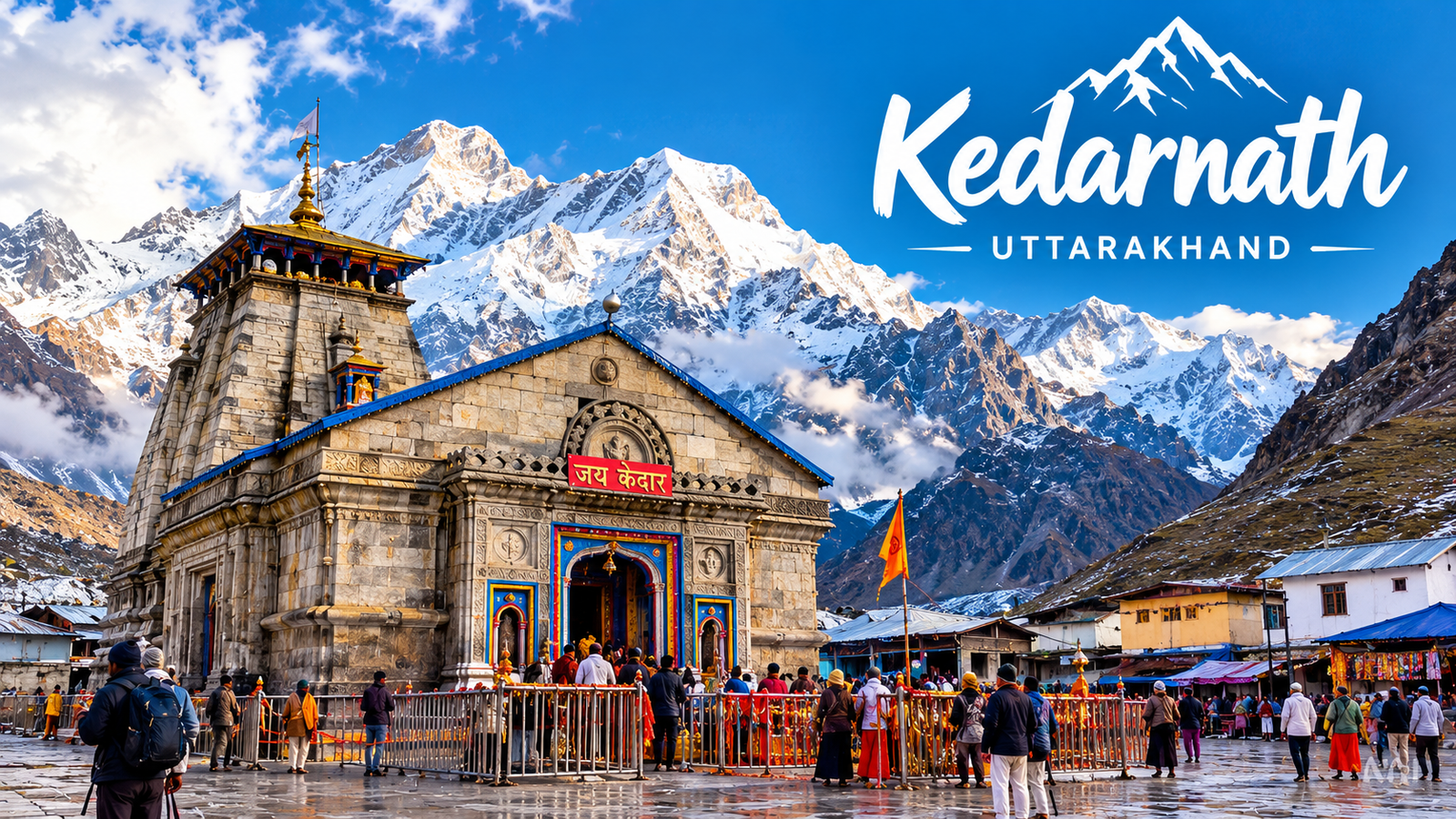
Kedarnath is one of the most sacred pilgrimage destinations in India. Situated in the majestic Garhwal Himalayas of Uttarakhand, Kedarnath is famous for its ancient temple dedicated to Lord Shiva, breathtaking snow-covered mountains, spiritual atmosphere, and extraordinary natural beauty.
Kedarnath is one of the twelve Jyotirlingas of Lord Shiva and an important destination of the Char Dham Yatra of Uttarakhand. Every year, thousands of devotees and tourists travel through the Himalayan mountains to seek blessings at the sacred Kedarnath Temple.
The temple is located in a beautiful mountain valley near the Mandakini River, surrounded by magnificent Himalayan peaks. Its traditional stone architecture, religious importance, and challenging mountain journey make it one of India's most remarkable pilgrimage destinations.
Kedarnath is not just a religious place. It represents faith, devotion, courage, natural beauty, and the deep cultural connection between the Himalayas and Indian civilization.
The journey to Kedarnath offers a unique experience of walking through forests, mountain valleys, waterfalls, rivers, glaciers, and beautiful Himalayan landscapes.
Important Facts About Kedarnath
| Particular | Information |
|---|---|
| Name | Kedarnath |
| State | Uttarakhand |
| Region | Garhwal Himalayas |
| District | Rudraprayag |
| Famous temple | Kedarnath Temple |
| Main deity | Lord Shiva |
| Religious importance | One of 12 Jyotirlingas |
| Char Dham status | Part of Uttarakhand Char Dham |
| Approximate elevation | 3,583 metres |
| Mountain range | Greater Himalayas |
| Nearby river | Mandakini |
| Nearest major roadhead | Gaurikund |
| Trek distance | Approximately 16–18 km from Gaurikund, depending on route |
| Best visiting period | Generally May–June and September–October |
| Famous identity | Sacred Himalayan pilgrimage |
The temple is situated at approximately 3,583 metres above sea level. Its high-altitude location makes the pilgrimage physically demanding and dependent on weather conditions.
History of Kedarnath
Kedarnath has a long and fascinating religious history. Its origins are associated with ancient Hindu traditions, the Mahabharata, Lord Shiva, and the spiritual heritage of the Himalayas.
The temple is believed by devotees to be thousands of years old, although its exact construction date is not established with certainty.
Ancient history and mythology
According to Hindu mythology, the Pandavas visited the Himalayas to seek forgiveness from Lord Shiva after the Kurukshetra War.
They wanted to atone for the violence and destruction caused during the war.
However, Lord Shiva did not wish to meet them and took the form of a bull.
When the Pandavas recognised him, Shiva disappeared into the earth. According to the traditional story, different parts of his body appeared at five locations in the Garhwal Himalayas.
These five sacred sites are collectively known as the Panch Kedar.
Connection with Adi Shankaracharya
The Kedarnath pilgrimage is traditionally associated with Adi Shankaracharya.
He is credited in religious tradition with reviving pilgrimage and spiritual practices at important Himalayan shrines.
A samadhi site associated with Adi Shankaracharya is located behind Kedarnath Temple.
Historical architecture
The temple is built using massive stone slabs and traditional Himalayan construction techniques.
Its architecture reflects the region's ancient religious and cultural traditions.
The structure has survived centuries of difficult weather, snowfall, and harsh Himalayan conditions.
Kedarnath during modern times
Kedarnath became particularly prominent as a pilgrimage destination because of its religious importance and the development of road and trekking infrastructure.
The 2013 Uttarakhand floods caused catastrophic destruction in the Kedarnath region and surrounding valleys.
The temple structure survived the disaster, although surrounding settlements and infrastructure suffered enormous damage.
After the disaster, reconstruction and restoration work improved facilities and access to the pilgrimage area
Religious Importance of Kedarnath
Kedarnath holds extraordinary importance in Hinduism.
It is considered one of the holiest temples dedicated to Lord Shiva and is worshipped by devotees from across India and abroad.
One of the twelve Jyotirlingas
Kedarnath is one of the twelve Jyotirlingas, which are considered sacred manifestations of Lord Shiva.
The twelve Jyotirlingas are:
- Somnath – Gujarat
- Mallikarjuna – Andhra Pradesh
- Mahakaleshwar – Madhya Pradesh
- Omkareshwar – Madhya Pradesh
- Kedarnath – Uttarakhand
- Bhimashankar – Maharashtra
- Kashi Vishwanath – Uttar Pradesh
- Trimbakeshwar – Maharashtra
- Vaidyanath – Jharkhand
- Nageshwar – Gujarat
- Rameshwaram – Tamil Nadu
- Grishneshwar – Maharashtra
Importance in the Char Dham Yatra
Kedarnath is one of the four destinations of Uttarakhand's Char Dham pilgrimage.
The four sacred destinations are:
- Yamunotri
- Gangotri
- Kedarnath
- Badrinath
These four temples are situated in the Garhwal Himalayas and represent an important pilgrimage tradition.
Panch Kedar
The Panch Kedar are five sacred temples dedicated to Lord Shiva.
| Temple | Religious association |
|---|---|
| Kedarnath | Hump of Lord Shiva |
| Tungnath | Arms |
| Rudranath | Face |
| Madhyamaheshwar | Navel |
| Kalpeshwar | Hair or matted locks |
These temples are associated with the traditional story of Lord Shiva appearing in different forms in the Garhwal Himalayas.
Kedarnath Temple – Architecture and Construction
The Kedarnath Temple is one of the finest examples of traditional Himalayan temple architecture.
The temple stands on a raised rectangular stone platform and is constructed using massive grey stone slabs. Its construction reflects the architectural knowledge and craftsmanship of earlier Himalayan communities.
Main architectural features
1. Stone construction
The temple is made from large, carefully fitted stone blocks. Its strong construction has helped it withstand extremely cold temperatures, heavy snowfall, and harsh mountain conditions.
2. Garbhagriha
The inner sanctum houses the sacred Shiva manifestation worshipped by devotees.
3. Mandapa
The temple has a main assembly hall where devotees gather for prayers and religious ceremonies.
4. Nandi statue
A sacred representation of Nandi, Lord Shiva's divine vehicle, is associated with the temple entrance.
5. Traditional carvings
The temple features traditional stonework and religious architectural details that reflect its spiritual heritage.
Why is Kedarnath Temple famous?
- It is one of the twelve Jyotirlingas.
- It is part of the Char Dham pilgrimage.
- It is associated with the Pandavas in Hindu mythology.
- It has a remarkable Himalayan stone architecture.
- It is surrounded by some of the most beautiful mountain scenery in India.
The present temple is traditionally associated with Adi Shankaracharya, although its precise construction history remains a subject of historical study.
Geography and Location of Kedarnath
Kedarnath is situated in Rudraprayag district in the Garhwal region of Uttarakhand.
It is located at an altitude of approximately 3,580 metres above sea level, in the high Himalayan mountain region.
The geographical environment consists of:
- Snow-covered mountain peaks.
- Glaciers and glacial valleys.
- Rocky mountain slopes.
- Alpine vegetation.
- Fast-flowing rivers.
- High-altitude grasslands.
Major geographical features
Kedarnath Peak
Kedarnath Peak rises dramatically behind the temple and is one of the most recognisable features of the landscape.
Kedar Dome
Kedar Dome is another magnificent Himalayan mountain visible in the surrounding region.
Chorabari Glacier
Chorabari Glacier is located near Kedarnath and forms part of the high-altitude glacial landscape associated with the Mandakini river system.
Mandakini River
The Mandakini is one of the most important rivers of the region. Its upper catchment is closely associated with the glaciers and mountains surrounding Kedarnath.
The geographical location of Kedarnath gives the region extraordinary natural beauty, but it also makes travel challenging because of sudden weather changes and difficult mountain terrain.
Climate and Weather of Kedarnath
Kedarnath experiences a cold alpine climate because of its high elevation.
The weather changes considerably throughout the year. Even during summer, temperatures can remain low, particularly in the mornings and evenings.
Summer season: May to June
Summer is one of the most popular periods for the pilgrimage.
- Snow begins to melt in accessible areas.
- The temple generally opens during this period.
- Days are relatively comfortable compared with winter.
- Thousands of pilgrims visit the shrine.
Monsoon season: July to August
The monsoon brings heavy rainfall to the Garhwal Himalayas.
Possible problems include:
- Landslides.
- Flash floods.
- Road blockages.
- Slippery trekking paths.
- Sudden changes in weather.
Pilgrims should be particularly careful during this season.
Autumn season: September to October
Autumn is often a beautiful period for visiting Kedarnath.
- Skies may become clearer.
- Mountain views are spectacular.
- Temperatures begin to fall.
- The pilgrimage season gradually approaches its end.
Winter season: November to April
Winter in Kedarnath is extremely cold.
Heavy snowfall makes the temple area inaccessible, and the main shrine closes for the winter season.
The ceremonial worship of the deity continues at the winter seat in Ukhimath.
| Season | General experience |
|---|---|
| May–June | Popular pilgrimage season |
| July–August | Rainfall and travel risks |
| September–October | Clearer weather and mountain views |
| November–April | Heavy snow and temple closure |
Famous Tourist and Religious Places in Kedarnath
Kedarnath has several important religious and natural attractions.
1. Kedarnath Temple
This is the main attraction of Kedarnath.
Dedicated to Lord Shiva, the temple attracts devotees from across India. Its stone architecture, sacred atmosphere, and magnificent Himalayan setting make it one of the most important religious destinations in the country.
2. Bhairavnath Temple
Bhairavnath Temple is situated on a hill near the Kedarnath Temple.
It is dedicated to Bhairav, a fierce manifestation of Lord Shiva.
According to local religious beliefs, Bhairavnath protects the Kedarnath region during the winter months when the main temple remains closed.
3. Adi Shankaracharya Samadhi
The samadhi site associated with Adi Shankaracharya is located behind the Kedarnath Temple.
It is an important spiritual attraction for pilgrims interested in Indian philosophy and the history of Hindu religious traditions.
4. Gandhi Sarovar
Gandhi Sarovar, also known as Chorabari Tal, is a beautiful high-altitude lake located near the Chorabari Glacier.
The lake is surrounded by mountains and offers stunning natural scenery.
The trek to this lake is physically demanding, and access depends on weather and local safety conditions.
5. Rudra Meditation Cave
Rudra Meditation Cave is a small meditation facility near the Kedarnath Temple complex.
It became widely known after the meditation retreat of the Indian Prime Minister in 2019.
The cave is associated with silence, meditation, and spiritual reflection.
6. Vasuki Tal
Vasuki Tal is a beautiful high-altitude glacial lake surrounded by dramatic mountain scenery.
It is an adventurous trekking destination and requires proper preparation, experience, and suitable weather conditions.
7. Sonprayag
Sonprayag is an important settlement on the route to Kedarnath.
It serves as a major transit point for pilgrims travelling towards Gaurikund.
Its natural surroundings include river valleys, green hills, and mountain landscapes.
8. Gaurikund
Gaurikund is the traditional starting point of the Kedarnath trek.
It is associated with Goddess Parvati and contains religious sites and a hot-water spring area.
Pilgrims begin their mountain journey from here towards Kedarnath.
Kedarnath Trek – Complete Journey Guide
The Kedarnath trek is one of India's most famous pilgrimage journeys.
The traditional trekking route begins at Gaurikund and passes through beautiful Himalayan landscapes before reaching Kedarnath Temple.
The trek is approximately 16–18 kilometres, depending on the route and current alignment.
Main trekking route
Gaurikund → Jungle Chatti → Bheembali → Linchauli → Kedarnath
The route includes mountain paths, bridges, resting points, small settlements, and beautiful natural scenery.
Important stages of the trek
1. Gaurikund
Gaurikund is the starting point of the traditional trek.
Pilgrims complete registration and necessary arrangements before beginning the journey.
2. Jungle Chatti
This is one of the important resting areas along the trekking route.
Visitors can take breaks and access basic facilities when available.
3. Bheembali
Bheembali is another major stop along the route.
It offers facilities for pilgrims and trekking support.
4. Linchauli
Linchauli is located at a higher altitude and provides magnificent views of the surrounding mountains.
5. Kedarnath
The final destination is the sacred Kedarnath Temple.
After reaching the temple, pilgrims can participate in prayers and seek blessings.
How difficult is the Kedarnath trek?
The Kedarnath trek is considered moderately difficult for many visitors, but its high altitude makes it physically demanding.
It can be particularly challenging for:
- Elderly pilgrims.
- People with limited walking ability.
- People who are not accustomed to high altitudes.
- Visitors with inadequate physical preparation.
Alternative ways to reach Kedarnath
Pilgrims who cannot complete the trek on foot may explore approved alternatives:
- Pony and mule services.
- Palki and other assisted transport.
- Helicopter services from authorised helipads.
Availability depends on weather, operational conditions, official regulations, and advance booking.
Official pilgrimage information should always be checked before travel.
How to Reach Kedarna
Kedarnath is not directly connected by road or railway. Visitors must travel to Gaurikund by road and then continue by trekking or an authorised alternative.
A. By road
The road journey generally follows:
Delhi → Haridwar → Rishikesh → Devprayag → Srinagar → Rudraprayag → Guptkashi → Sonprayag → Gaurikund → Kedarnath
The journey passes through beautiful mountain valleys, river crossings, forests, and Himalayan villages.
B. By train
The nearest major railway stations commonly used by pilgrims include:
- Rishikesh
- Haridwar
- Dehradun
From these railway stations, visitors can hire taxis, use buses, or arrange private transportation towards Sonprayag and Gaurikund.
C. By air
The nearest major airport is Jolly Grant Airport near Dehradun.
From the airport, visitors can travel by road towards the Kedarnath pilgrimage route.
D. By helicopter
Helicopter services are available during the pilgrimage season, subject to government approval and weather conditions.
Authorised services generally operate from:
- Phata
- Guptkashi
- Sirsi
Helicopter services can significantly reduce travel time, but passengers must follow official booking, reporting, baggage, and safety instructions.
Important: Always book through the official government-authorised booking system rather than unofficial agents.
Registration and Important Travel Documents
Registration is an important requirement for the Kedarnath Yatra.
The Uttarakhand government provides an official online registration facility for pilgrims.
Registration process
- Visit the official Char Dham registration website.
- Create an account.
- Enter the required personal details.
- Add the details of accompanying pilgrims.
- Select Kedarnath as the pilgrimage destination.
- Complete the registration process.
- Download and save the registration confirmation.
Official website: Uttarakhand Char Dham Yatra Registration.
Important items to carry
- Government-issued identity proof.
- Yatra registration confirmation.
- Warm clothes.
- Waterproof jacket.
- Comfortable trekking shoes.
- Personal medicines.
- Water bottle.
- Energy snacks.
- Torch.
- Power bank.
- Basic first-aid supplies.
Pilgrims should also check official weather forecasts, medical advisories, and road conditions before beginning their journey.
Accommodation and Food in Kedarnath
Kedarnath has seasonal accommodation facilities for pilgrims.
Accommodation options
1. GMVN accommodation
Garhwal Mandal Vikas Nigam provides accommodation facilities at selected locations along the pilgrimage route and in the Kedarnath region.
2. Dharamshalas
Several religious organisations and charitable institutions provide accommodation for pilgrims.
3. Tented accommodation
Temporary tent facilities are available during the pilgrimage season, subject to weather and operational conditions.
4. Guesthouses and lodges
Basic guesthouses and accommodation facilities are available at different points along the route.
Food in Kedarnath
The food available in Kedarnath is generally simple and suitable for pilgrims.
Common food options include:
- Dal and rice.
- Roti and vegetables.
- Khichdi.
- Puri and sabzi.
- Tea and coffee.
- Soups.
- Packaged snacks.
Many visitors prefer light vegetarian food during the pilgrimage.
Because of the high altitude and difficult transportation conditions, food availability and prices may vary.
Religious Festivals and Celebrations in Kedarnath
Religious festivals and ceremonies are an important part of Kedarnath's identity.
1. Temple opening ceremony
The opening of Kedarnath Temple is an important religious occasion.
The ceremony takes place according to traditional religious calculations and announcements.
Thousands of devotees eagerly wait for the temple to reopen after winter.
2. Maha Shivratri
Maha Shivratri is one of the most important festivals dedicated to Lord Shiva.
It is celebrated with prayers, fasting, devotional songs, and religious ceremonies.
3. Shravan month
The month of Shravan is considered especially sacred for Lord Shiva.
Devotees visit Shiva temples and perform special prayers during this period.
4. Temple closing ceremony
Before the arrival of severe winter conditions, the Kedarnath Temple closes for the season.
The ceremonial worship of the deity continues at the winter seat in Ukhimath.
This tradition maintains the religious continuity of Kedarnath throughout the year.
Wildlife and Biodiversity Around Kedarnath
The Kedarnath region forms part of an ecologically important Himalayan landscape.
Its high-altitude forests, alpine meadows, glaciers, and mountain valleys support a variety of wildlife and plant species.
Important wildlife
- Himalayan musk deer.
- Himalayan monal.
- Himalayan black bear.
- Snow leopard in suitable high-altitude habitats.
- Himalayan tahr.
- Blue sheep in suitable mountain habitats.
Important vegetation
The surrounding region supports:
- Alpine grasses.
- Rhododendron.
- Himalayan birch.
- Juniper.
- Medicinal herbs.
- Seasonal alpine flowers.
Kedarnath Wildlife Sanctuary
The Kedarnath Wildlife Sanctuary is an important protected area in Uttarakhand.
It covers a large Himalayan landscape and provides habitat for several rare and threatened species.
It is especially significant for the conservation of musk deer and other mountain wildlife.
The sanctuary demonstrates the ecological importance of protecting the Himalayan environment.
The 2013 Kedarnath Disaster
The 2013 disaster was one of the most devastating natural disasters in Uttarakhand's modern history.
In June 2013, exceptionally heavy rainfall and flooding affected several parts of the state, particularly the Kedarnath and Mandakini river valleys.
The disaster caused enormous damage to homes, roads, bridges, hotels, settlements, and pilgrimage infrastructure.
Thousands of people lost their lives or went missing across the affected region.
Major causes and contributing factors
- Extremely heavy rainfall.
- Flooding in Himalayan river systems.
- Slope instability and landslides.
- Damage to infrastructure near river channels.
- Difficult geographical conditions.
- Limited emergency access in remote mountain areas.
Role of Bhim Shila
Bhim Shila is a massive boulder located behind Kedarnath Temple.
According to local accounts, it was carried down during the 2013 disaster and came to rest behind the temple.
The boulder is widely regarded by devotees as a symbol of divine protection because the main temple structure survived while much of the surrounding area was devastated.
Reconstruction after the disaster
Following the disaster, extensive reconstruction and restoration work was undertaken.
Major priorities included:
- Rebuilding trekking routes.
- Improving pedestrian facilities.
- Strengthening protective structures.
- Developing emergency shelters.
- Improving medical services.
- Strengthening disaster preparedness.
The disaster also highlighted the need for sustainable construction and responsible tourism in the fragile Himalayan environment.
Economic Importance of Kedarnath
Kedarnath is primarily a pilgrimage destination, but tourism has a significant impact on the regional economy.
Major economic activities
1. Religious tourism
Pilgrims visiting Kedarnath support accommodation, transport, food services, and local businesses.
2. Pony and mule services
These services provide employment to local residents and help pilgrims travel along the mountain route.
3. Accommodation
Hotels, guesthouses, dharamshalas, and seasonal camps generate income during the pilgrimage season.
4. Local shops
Small businesses sell religious items, food, clothing, trekking supplies, and souvenirs.
5. Transportation
Taxi operators, drivers, helicopter operators, and local transport providers benefit from pilgrimage-related travel.
6. Employment opportunities
Tourism creates seasonal employment for guides, porters, shopkeepers, cooks, drivers, and other workers.
Responsible tourism is important to ensure that the economic benefits reach local communities without damaging the environment.
Environmental Challenges in Kedarnath
The Kedarnath region is environmentally sensitive because of its high altitude, glaciers, steep slopes, and unpredictable weather.
Major environmental challenges
1. Climate change
Changes in temperature, snowfall, and glacier conditions affect the Himalayan ecosystem.
2. Glacial retreat
Glaciers in the Himalayan region are experiencing changes that can influence river systems and mountain hazards.
3. Landslides
Heavy rainfall and unstable slopes can damage trekking routes and infrastructure.
4. Flash floods
Sudden increases in river water levels can create serious risks for settlements and pilgrims.
5. Plastic pollution
Growing tourist numbers can increase waste generation.
6. Unplanned construction
Excessive development near rivers and unstable slopes can increase environmental vulnerability.
How can Kedarnath be protected?
- Avoid throwing plastic and other waste.
- Use designated waste collection points.
- Follow official trekking routes.
- Avoid disturbing wildlife.
- Support environmentally responsible accommodation.
- Respect local communities and religious traditions.
- Follow weather and disaster-management advisories.
- Promote sustainable tourism.
Protecting Kedarnath is essential for preserving its religious, cultural, and ecological importance.
Best Time to Visit Kedarnath Kedarnath
The best time to visit Kedarnath depends on weather conditions, temple opening dates, and personal travel preferences.
| Month | Travel experience |
|---|---|
| April | Temple opening period varies by year |
| May | Popular pilgrimage season |
| June | Pleasant relative to winter |
| July | Monsoon and landslide risks |
| August | Heavy rainfall risk |
| September | Often clearer mountain views |
| October | Cold weather and seasonal closure approaching |
| November–March | Main temple generally closed due to winter |
My recommendation: May to June and September to early October are generally favourable periods, subject to the official pilgrimage schedule and weather conditions.
For 2026, the official government portal announced the Kedarnath temple opening date as 22 April 2026. Future opening and closing dates should always be checked through the official portal.
Safety Tips for Kedarnath Yatra
Kedarnath is a high-altitude pilgrimage, and visitors should prepare properly before travelling.
Important safety recommendations include:
- Start physical preparation several weeks before the trek.
- Walk regularly to improve stamina.
- Carry adequate warm clothing.
- Wear comfortable trekking shoes.
- Stay hydrated.
- Avoid rushing during the trek.
- Follow instructions from local authorities.
- Do not travel during severe weather warnings.
- Take sufficient rest.
- Seek medical assistance if experiencing altitude-related symptoms.
High-altitude health precautions
Kedarnath is situated at approximately 3,580 metres.
Some visitors may experience altitude-related symptoms such as:
- Headache.
- Nausea.
- Dizziness.
- Unusual tiredness.
- Breathlessness.
Severe symptoms such as confusion, difficulty walking, or breathlessness at rest require immediate medical attention and descent to a lower altitude.
People with existing medical conditions should consult their doctor before undertaking the pilgrimage.
Seven-Day Kedarnath Travel Itinerary
Here is an example itinerary for visitors travelling from the Haridwar or Rishikesh side.
| Day | Destination | Activities |
|---|---|---|
| Day 1 | Haridwar/Rishikesh | Arrival and local sightseeing |
| Day 2 | Rishikesh to Guptkashi | Mountain road journey |
| Day 3 | Guptkashi to Gaurikund to Kedarnath | Trek or approved transport |
| Day 4 | Kedarnath | Temple darshan and local sightseeing |
| Day 5 | Kedarnath to Gaurikund | Return trek |
| Day 6 | Gaurikund to Rudraprayag | Return journey |
| Day 7 | Rudraprayag to Rishikesh | Return journey |
This is a sample plan. Additional days may be necessary for weather delays, rest, and travel disruptions.
Interesting Facts About Kedarnath
- Kedarnath is one of the twelve Jyotirlingas of Lord Shiva.
- It is part of Uttarakhand's Char Dham pilgrimage.
- The temple is located at approximately 3,580 metres.
- The Mandakini River flows through the surrounding region.
- The temple is constructed using massive grey stone slabs.
- Kedarnath is one of the five Panch Kedar temples.
- The shrine remains closed during the harsh winter season.
- Ukhimath serves as the winter seat for the worship of Kedarnath's deity.
- Bhim Shila is a famous landmark associated with the 2013 disaster.
- Kedarnath is located in Rudraprayag district.
- The traditional trek begins at Gaurikund.
- The Kedarnath Wildlife Sanctuary protects important Himalayan habitats.
- Adi Shankaracharya is traditionally associated with the temple's religious history.
- The region is surrounded by some of the most spectacular Himalayan mountain scenery.
- Kedarnath is one of India's most significant spiritual tourism destinations.
Why Should You Visit Kedarnath?
Kedarnath is a destination that offers much more than an ordinary holiday.
There are several reasons why people visit this sacred Himalayan place.
- Spiritual experience: Seek blessings at one of the twelve Jyotirlingas.
- Natural beauty: Experience the magnificent Himalayan mountains.
- Adventure: Enjoy one of India's most famous pilgrimage treks.
- Cultural heritage: Discover ancient religious traditions and mythology.
- Peace and meditation: Experience the peaceful mountain environment.
- Historical significance: Explore the architectural and religious heritage of the temple.
The journey requires physical preparation and patience, but for many devotees, reaching Kedarnath is an unforgettable life experience.
Future of Kedarnath Tourism
The future of Kedarnath tourism depends on sustainable infrastructure and responsible pilgrimage management.
Important development priorities include:
Better infrastructure
Improved roads, trekking paths, shelters, medical facilities, and communication systems can make the pilgrimage safer.
Disaster management
Early-warning systems, weather monitoring, evacuation planning, and emergency response facilities are essential.
Sustainable tourism
Tourism development should respect the carrying capacity of the Himalayan ecosystem.
Local employment
Supporting local guides, homestays, transport operators, food businesses, and handicraft producers can strengthen the regional economy.
Environmental protection
Glaciers, rivers, forests, and mountain habitats must be protected through responsible development.
The goal should be to make Kedarnath accessible while preserving its natural and spiritual identity.
Ask a question
Have a question about this article? Ask below and our team will reply.